 Palimio
Sky Is No Longer a Broadcaster, It's a Creator: The Numbers Show Why It's Working
For most of TV's social-era history, broadcasters treated platforms like Instagram and TikTok as distribution: clip the show, post the clip, drive the tune-in. Sky has explicitly stopped doing that.
May 4, 2026
The brand now describes itself as a creator on social media rather than a distributor, with the platform serving as the front door to the brand for the next generation of viewers, not as a marketing channel for linear.
We connected @hellosky's TikTok to Palimio and read the patterns. With an AVG of over 400k views per post and a steady 5.4% engagement rate, the data tells a clean version of that strategy story.
The growth is real and it came from leaning into format
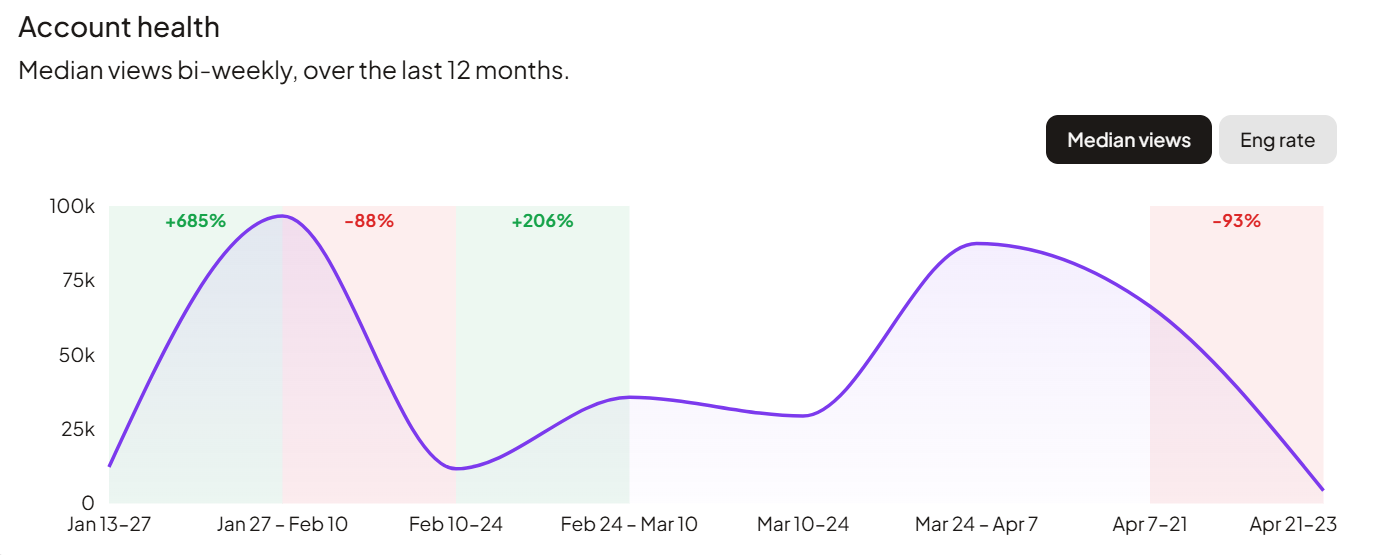
The most telling number on @hellosky recent feed is the gap between average and median views: roughly 10x. The average post does around 410,000 views; the median does around 42,000. That gap is what virality looks like in data. A small number of breakout posts are doing enormous reach.
Engagement rate is the second number worth pausing on. It holds steady at 5.4%, which puts Sky comfortably above the threshold most marketers treat as healthy and gives them headroom to push higher. Reach is being driven by hits; engagement is being held by everything else.
The question isn't whether Sky is going viral. It's whether they know which formats are doing it.
Comedy Sketches are the engine. Satirical Commentary is the breakaway.
Two formats sit at the top of the board, but they're playing different roles.
Comedy Sketches are the volume engine. They're around a quarter of Sky's recent output and pull a median of 102k views at 5.4% engagement. They're the format Sky publishes most that still performs well. The reach compounds because the cadence compounds.
Satirical Commentary is the breakaway format. It's published far less frequently, but it's putting up a median of 364k views and 9.1% engagement - almost double Comedy Sketches' median and three times Sky's overall engagement rate. By every Palimio benchmark, this is the format Sky is most under-publishing relative to the demand for it.
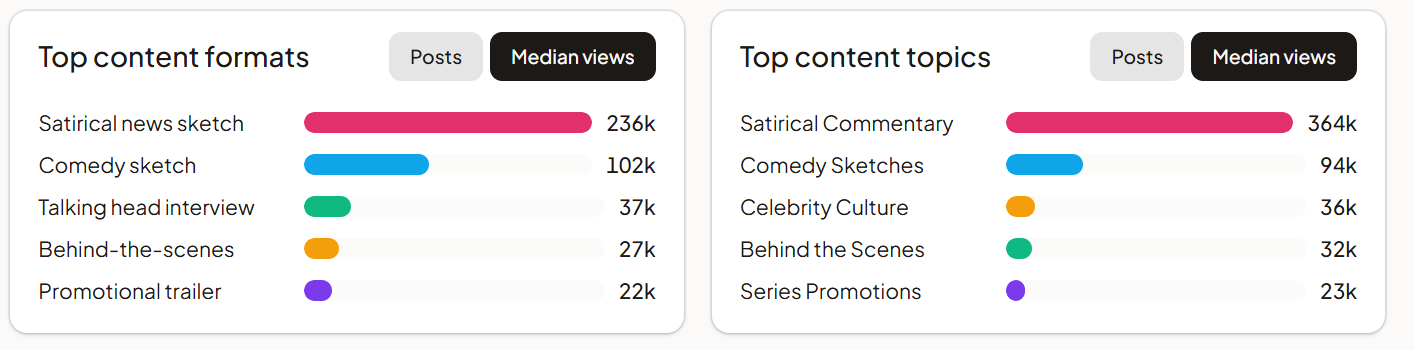
The same shape repeats at format level: Satirical news sketches sit at a 236k median and a 9.75% engagement rate from a small share of total output. The pattern is consistent. When Sky leans into comedy with a point of view, the algorithm rewards them. When they lean into comedy without one, they still win, but smaller.
When Sky behaves like a broadcaster, the numbers fall
The flip side of the data is just as clean. Promotional trailers make up a large share of recent output and sit at a 22k median, the worst of any format with meaningful volume. Their median has fallen from the high tens of thousands earlier in the year to the low twenties more recently, despite the channel growing overall. Audience tolerance for overtly commercial content is collapsing on TikTok, and Sky's own data is showing it.
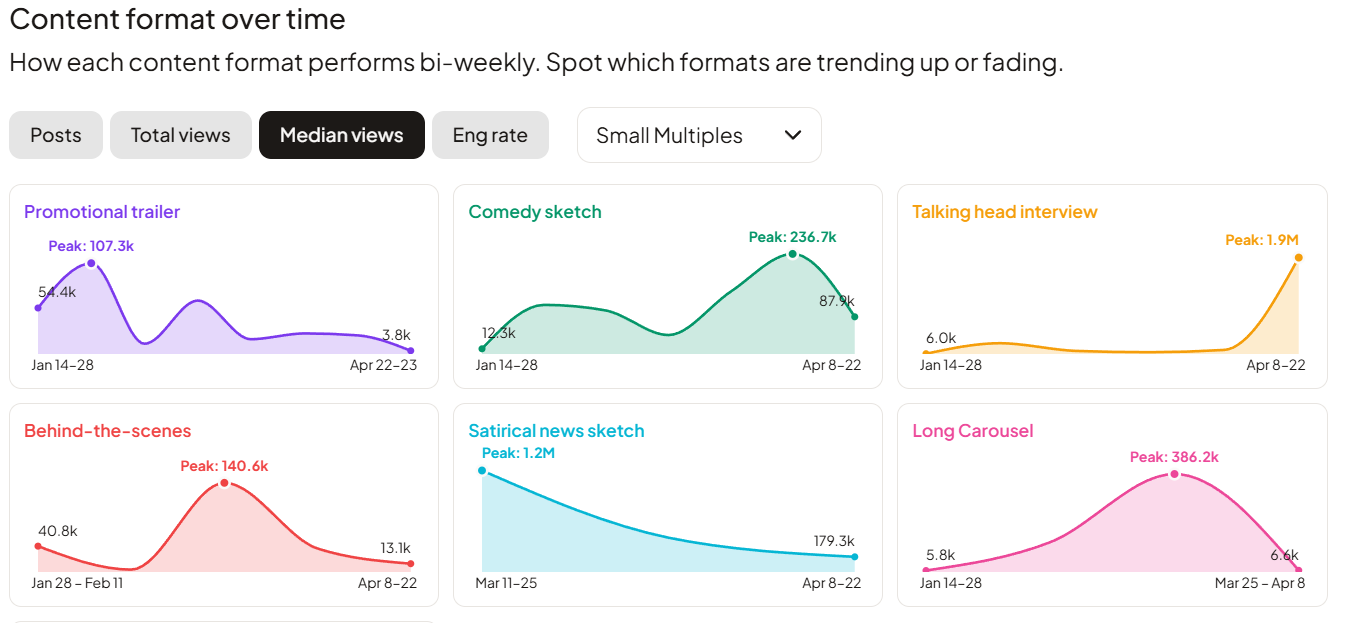
Behind-the-Scenes content tells the same story in sharper relief. Engagement rate on BTS posts has fallen from a January high of nearly 20% to roughly 3%. That's not noise; that's a clear audience signal. The novelty of a network sharing its production process has worn off as the broader Sky feed has grown more creator-led. Followers don't want a peek behind the curtain anymore; they want what's on stage.
This is the cleanest evidence in the data for the strategic shift Sky is publicly making. The posts that look like a broadcaster underperform. The posts that look like a creator overperform. The bar is moving in the same direction the brand is.
Anatomy of a hit: the 12.3M views and the 4.1M views
The two most instructive posts in the dataset weren't the same format, the same topic, or even close to the same engagement profile.
The 12.3M-view Jack Whitehall padel sketch is a celebrity-first interview tagged as Comedy Sketches. It's a celebrity-driven clip riding on Whitehall's existing audience and the show context. Its engagement rate is 0.39%, bottom of the channel. The post worked because of who, not because of what. That's a perfectly valid lever for a broadcaster, but it's not the kind of viewing the data suggests Sky should bet on.
The 4.1M-view Mort/Madagascar edit is the opposite kind of hit. Comedy sketch, fan-edit aesthetic, 19.08% engagement, almost forty times the average for the channel. This post is the creator economy's exact playbook: nostalgia hijack, audience-native humour, no commercial framing. The reach is a fraction of the Whitehall clip; the audience signal is many times stronger. People didn't just watch this one. They saved it, shared it, sent it to a friend.
The Madagascar edit is what "Sky as creator" looks like. The Whitehall padel sketch is what "Sky as broadcaster putting talent on TikTok" looks like. Both are wins by raw views. Only one is a win by audience signal.
Sunday is the algorithm's day. Sky already knows it.
Cadence reveals strategy. Sky's strongest day by a clean margin is Sunday, with a 173k median view count and a 6.6% engagement rate, both meaningfully above any other day of the week. The closest day in median views does roughly a quarter of that. The pattern holds at hour-of-day too: posts published in the late evening UK window dominate the rest of the week's output.
This is unmistakably the Saturday Night Live UK pattern. The show airs Saturday night; Sky pushes the cuts overnight into Sunday morning, and Sunday evening becomes the algorithm's payoff day for last night's broadcast. The data doesn't argue with the strategy. It validates it.
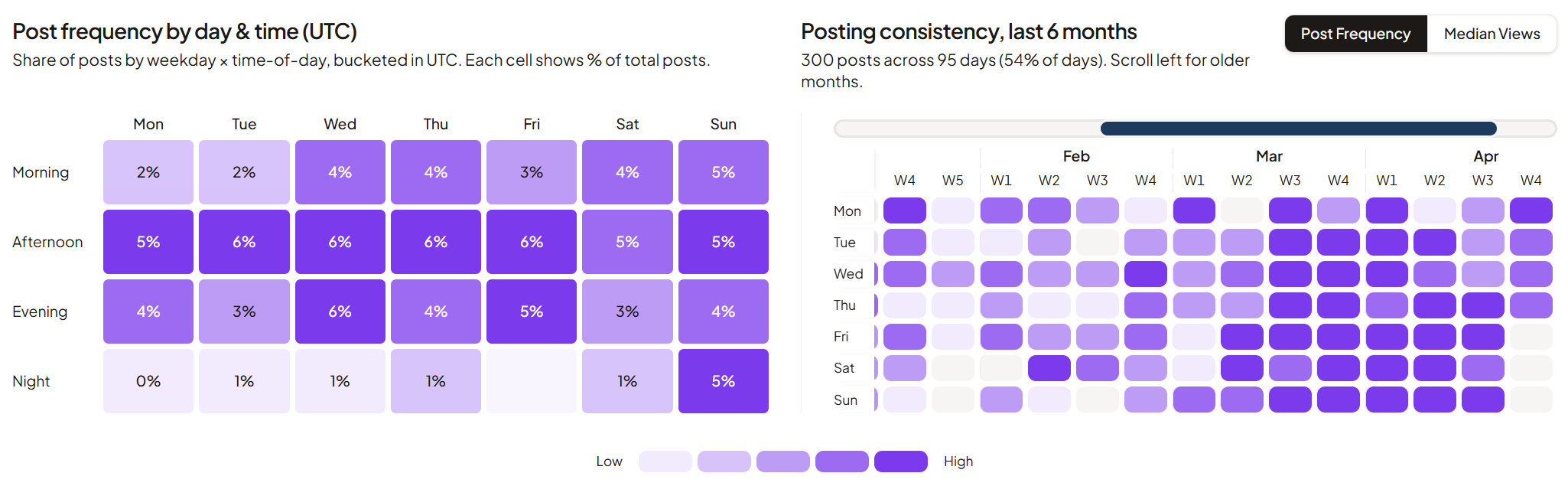
The opportunity buried in the cadence pattern is what to put in the rest of the week. Wednesday and Thursday medians sit roughly an order of magnitude below Sunday's. Sky has effectively built a one-show TikTok. The next layer of growth comes from finding a second weekday rhythm, almost certainly led by the formats Palimio is flagging - Satirical news sketches, Satirical Commentary - that aren't tied to a Saturday broadcast.
What drives discussion: satire is the only thing people actually argue about
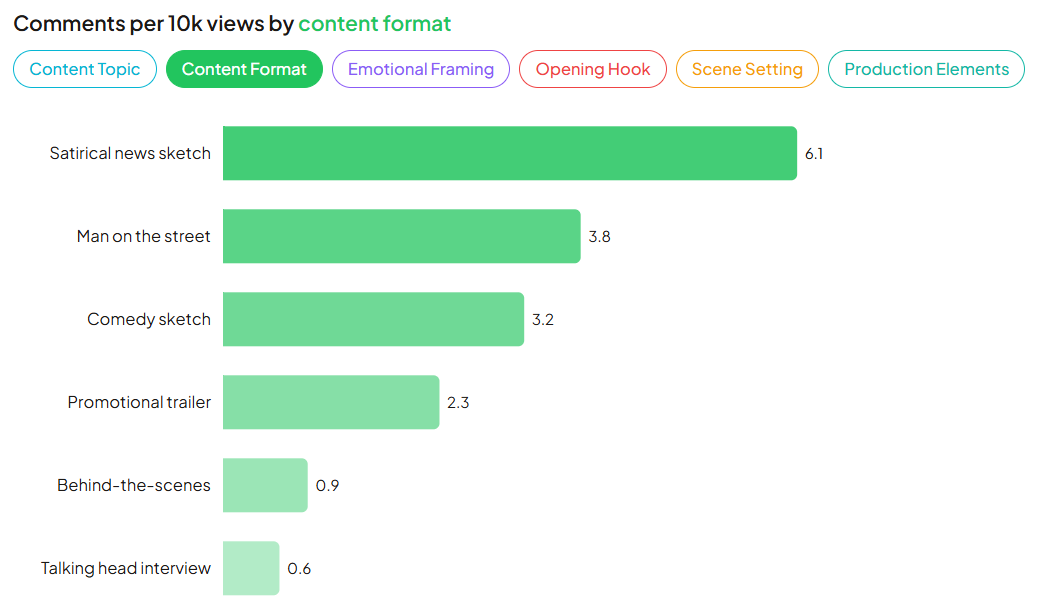
Most of Sky's reach is consumption, not conversation. Comedy Sketches generate 3.2 comments per 10,000 views. Celebrity Culture posts generate 1. Both are normal for entertainment-first feeds: people watch, they laugh, they swipe.
Satirical Commentary generates 6.1 comments per 10,000 views, multiples above any other meaningful topic. People comment on satire because satire takes a position, and positions invite responses. This is the only place in Sky's catalogue where the audience is doing something other than watching.
For a creator-style brand, that comment surface is strategic. It's where audience identity is built, where the algorithm reads strong intent, and where follower-to-fan conversion actually happens. Sky's lowest-volume, highest-performing topic is also the only topic generating sustained conversation. That's not a coincidence; it's a structural argument for publishing more of it.
The polarisation question
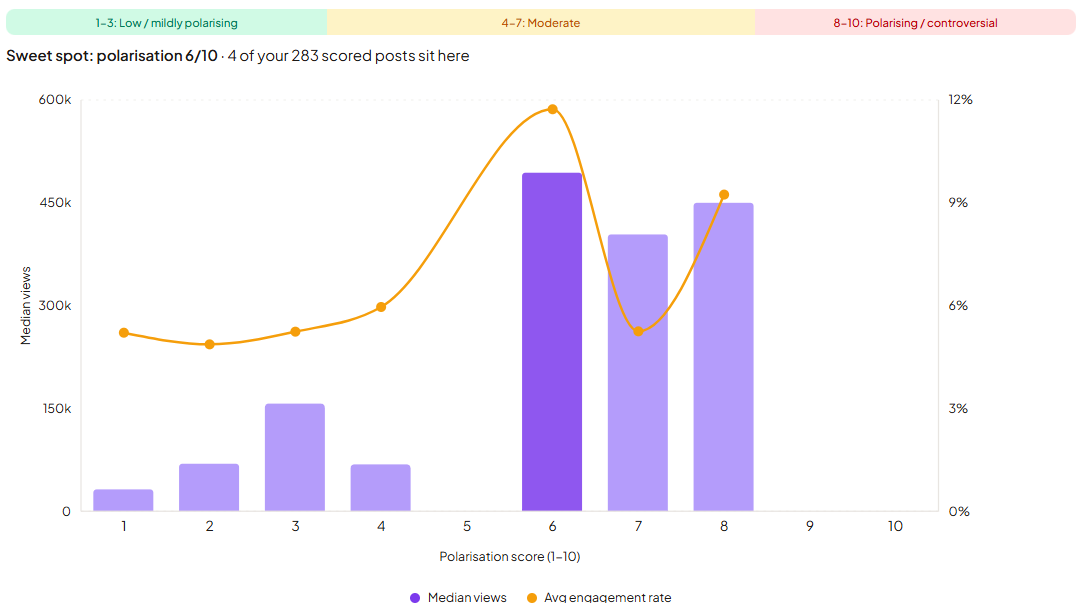
The data also tells you what Sky isn't doing, and that's just as much a strategic decision. Their average controversy score (Palimio's measure of how polarising a post is) sits at 1.8 out of 10. The median is 1. The most controversial post on the feed scores an 8, but those are vanishingly rare.
In other words: Sky is winning attention without manufacturing tension. That's a much harder game than rage-baiting and is the right one for a broadcaster building long-term trust with a Gen Z audience. The numbers suggest there's still room to push the satire dial up without the polarisation dial moving with it. That's the rare combination most accounts can't pull off.
What the strategy actually looks like
Pulled together, the playbook reads:
Sky has roughly doubled output while growing median views and maintaining engagement, which is the inverse of what most brands experience when they push volume.
The two top-performing categories (Satirical Commentary, Comedy Sketches) are also the two formats with the strongest engagement, suggesting Sky should publish more of both, especially the under-utilised satire category.
The two lowest-performing categories (Promotional Trailers, Behind-the-Scenes) are exactly the categories that look like broadcaster behaviour rather than creator behaviour. The data is telling Sky to keep moving away from them.
Sunday-night SNL UK is doing nearly all the heavy lifting on the cadence side. The next growth layer is a second weekday rhythm not tied to a single show.
Engagement rate is steady at 5.4%, with clear evidence that satire-led posts can pull it above 9% when published.
This is what Palimio does
Every chart and finding above came from one command: connect a TikTok handle, let Palimio tag the catalogue across format, topic, tone, hook, setting and production elements, and read the patterns in plain English. No tagging spreadsheet, no big team doing tons of manual work, no six-figure contract.
If you run a brand, agency, or creator team and want to see what's actually working in your own feed, drop us a message and we'll show you.